Wisconsin Car Loan Laws
The Wisconsin Consumer Act gives car buyers a cure notice and 15 days to catch up, lets them demand a court hearing before repossession, and bars small deficiencies.
Updated By Lenditia Editorial Team 7-minute read Right to cure
In short
Under the Wisconsin Consumer Act, once more than one full payment is over 10 days late, the creditor must send a notice of your right to cure, and you get 15 days to catch up before it can repossess or accelerate. Dealer contracts made after October 31, 1984 have no maximum finance charge. If you owed $1,000 or less at default, a repossession ends the debt. The state sales tax is 5%, plus county tax where it applies, after your trade-in.
- Right to cure
- Yes: 15 days after notice
- Rate ceiling
- No maximum since 1984
- Doc fee limit
- No cap; must be reasonable
- Vehicle sales tax
- 5% + county, after trade
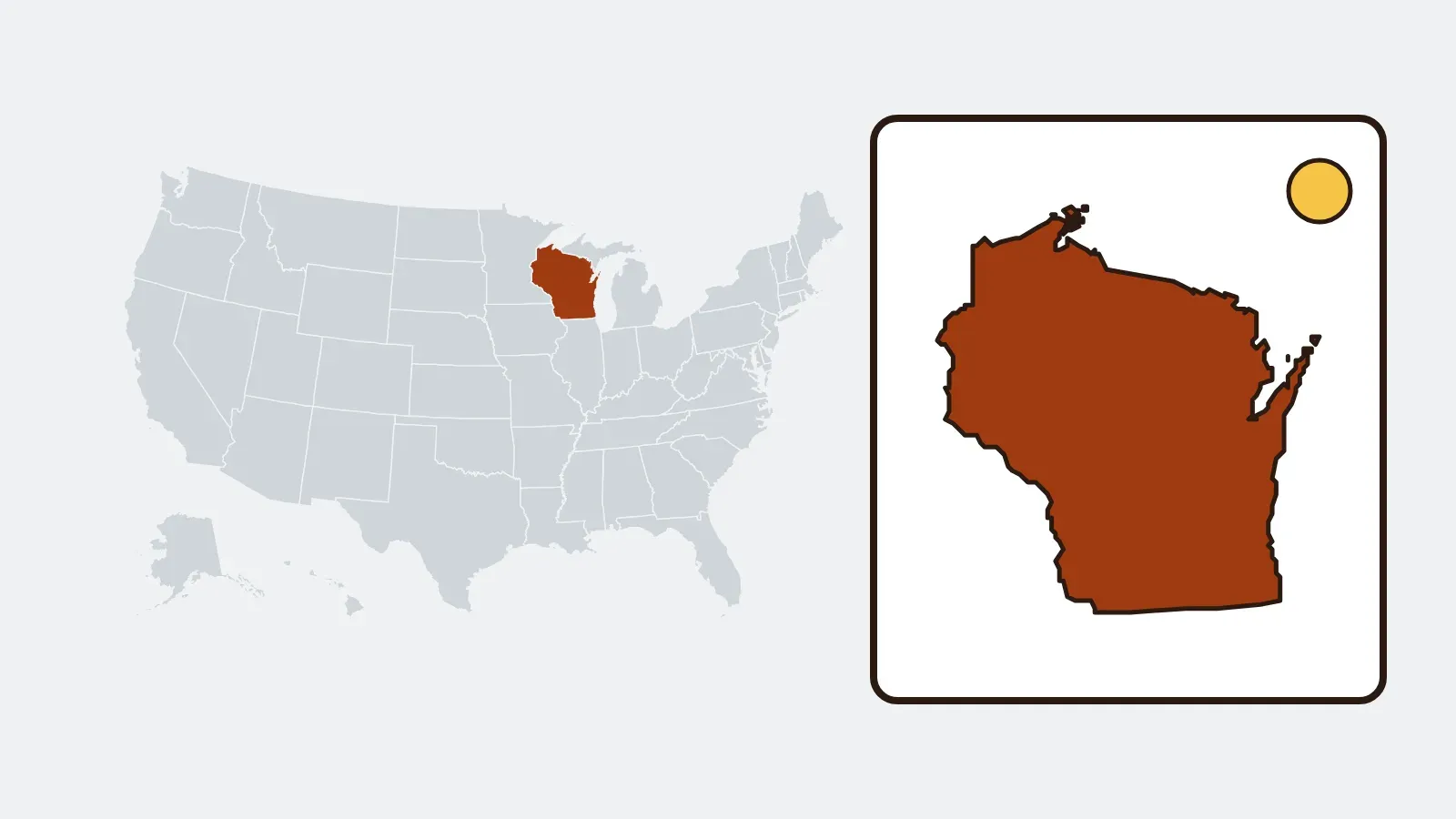
Wisconsin car-finance rules at a glance
- Right to cure
- Yes: 15 days after a notice, once more than one payment is 10+ days late
- Wis. Stat. ss. 425.103 to 425.105; no right after two noticed defaults in 12 months.
- Rate ceiling
- No maximum finance charge on contracts made after October 31, 1984
- Wis. Stat. s. 218.0142(3) and s. 422.201; banks and credit unions follow their own rules.
- Doc fee limit
- No dollar cap; DOT can reject an unreasonable service fee
- Trans 139 and s. 218.0116; the fee must be disclosed on the contract.
- After repossession
- 15 days to redeem; no deficiency if $1,000 or less owed at default
- Before taking a car, the creditor must give notice and you may demand a court hearing (s. 425.205).
- Vehicle sales tax
- 5% state + 0.5% county where adopted, after trade-in
- Milwaukee city and county taxes differ.
- Regulator
- Department of Financial Institutions (Division of Banking)
What a Wisconsin car contract can charge
A dealer-arranged loan is a retail installment contract. Wisconsin's motor vehicle installment sales statute, s. 218.0142, says a retail installment sale made after October 31, 1984 is not subject to any maximum finance charge. The general Consumer Act rule in s. 422.201 says the same for consumer credit transactions.
The statute protects you in other ways. The sale must be in a signed writing, you must get a written statement of the cash price, down payment, trade-in credit, amount financed, finance charge and payment schedule, and you must receive an exact copy of the contract when you sign. A contract signed in blank is not allowed. A finance company that buys your contract must notify you in writing within 30 days.
Service fees and taxes in Wisconsin
- Service fee. Wisconsin's doc fee is called a service fee. The Department of Transportation has said the law sets no dollar cap, but it may judge whether a fee is reasonable and can order refunds of an improper fee. The fee may cover sales-related inspections or forms required by law, must be disclosed on the purchase contract, and the dealer must list what it covers if you ask.
- Advertising. An ad that leaves out the service fee must say the price does not include it.
- Sales tax. The state rate is 5%. A 0.5% county tax applies in counties that adopted it, based on where the car will be kept, and Milwaukee has its own city and county taxes.
- Trade-ins. The amount allowed for your trade-in is not taxed when the trade is part of the same sale.
Check the dealer's total, including the service fee and any add-ons, with the out-the-door price calculator.
Falling behind on a car loan in Wisconsin
On a monthly contract, you are in default under s. 425.103 when more than one full payment has been unpaid for more than 10 days, or when the first or last payment is 40 days late. Late fees do not count toward that amount.
- Notice of right to cure. Before acting on the default, the creditor must give you a notice under s. 425.104. For a car, it must be combined with a repossession notice that says you may demand, in writing within 15 days, that the creditor go to court.
- 15 days to cure. During that time, the creditor may not accelerate, sue or take the car (s. 425.105). Pay the past-due installments and any unpaid late charges, and the contract continues as if you had not defaulted.
- Limit. You have no right to cure if you already defaulted twice on the same contract in the previous 12 months and got a cure notice each time.
- Repossession without court. If you do not cure or demand a hearing, the creditor may take the car no sooner than 15 days after the notice. It may not breach the peace or enter your home unless you ask it to (s. 425.206).
After repossession in Wisconsin
- 15 days to redeem. Within 15 days after the car is taken, you can get it back by paying the past-due amount without acceleration, the creditor's allowed costs, and a deposit equal to the lesser of three installments or a third of what remains (s. 425.208).
- No deficiency on small debts. If you owed $1,000 or less at default, you are not personally liable for the rest after a repossession or voluntary surrender (s. 425.209).
- Proper sale required. For larger debts, you owe a deficiency only if the creditor sold the car in good faith and in a commercially reasonable way.
Our guides to repossession and the balance left after a sale explain how to respond.
Where to check a lender and complain
Under chapter 218, sales finance companies, including dealers that keep their own installment contracts, need a license from the Division of Banking or the Department of Transportation. A finance company that buys contracts without a required license can lose the right to collect.
Department of Financial Institutions
Its Division of Banking is one of the two licensors chapter 218 names for sales finance companies.
Department of Transportation
Licenses dealers, reviews service fees and handles complaints about dealer conduct.
Consumer Financial Protection Bureau
Takes complaints about any auto lender or servicer, including banks and finance companies.
Questions people ask
Do I get a chance to catch up before my car is repossessed in Wisconsin?
Yes. After a default, the creditor must send a notice of your right to cure, and you have 15 days to pay what is past due. The right is lost after two cured defaults with notices in the previous 12 months.
Is there a maximum interest rate on a car loan in Wisconsin?
No. Retail installment sales of motor vehicles made after October 31, 1984 are not subject to any maximum finance charge.
Can I owe money after a repossession in Wisconsin?
Only if you owed more than $1,000 at default and the creditor sold the car in a commercially reasonable way.
Does a trade-in lower the sales tax in Wisconsin?
Yes. The amount allowed for a trade-in in the same transaction is not taxed.
Sources
- Wis. Stat. §425.105: Cure of default
- Wis. Stat. ch. 425: Creditors' remedies, ss. 425.103 to 425.209 (2025 edition, via Justia)
- Wis. Stat. §218.0142: Motor vehicle installment sales (via Justia)
- Wisconsin DOR Publication 202: Sales and use tax on motor vehicle sales
- Wisconsin DOT dealer newsletter, October 2025: Service fees
- Wisconsin DOT dealer newsletter, January 2021: Service fee reasonableness
Facts on this page were checked against these sources on October 26, 2026. Check the Department of Revenue for current county and Milwaukee tax rates.
Read next
-
Help
Behind on payments
What a missed payment costs, what to ask your lender for, and when repossession becomes a risk.
-
Help
Repossession
When the lender can take the car, what an agent may not do, and how to get it back.
-
Help
Deficiency balance
How lenders compute what you owe after a repossession sale, and how to check or dispute it.