Vermont Car Loan Laws
Vermont caps the rate on car financing by the vehicle's model year, taxes the purchase at 6%, and follows the Uniform Commercial Code when a car is repossessed.
Updated By Lenditia Editorial Team 6-minute read No right to cure
In short
A Vermont dealer contract can charge at most 18% a year on a car from the current or previous model year and 20% on an older one. We found no statutory cap on dealer doc fees, and the Department of Motor Vehicles treats the fee as part of the taxable price. The 6% purchase and use tax applies to the price after your trade-in. We found no right-to-cure notice in state law, so repossession follows the Uniform Commercial Code.
- Right to cure
- None found in state law
- Rate ceiling
- 18% newer, 20% older
- Doc fee limit
- No cap found
- Vehicle sales tax
- 6% purchase and use tax
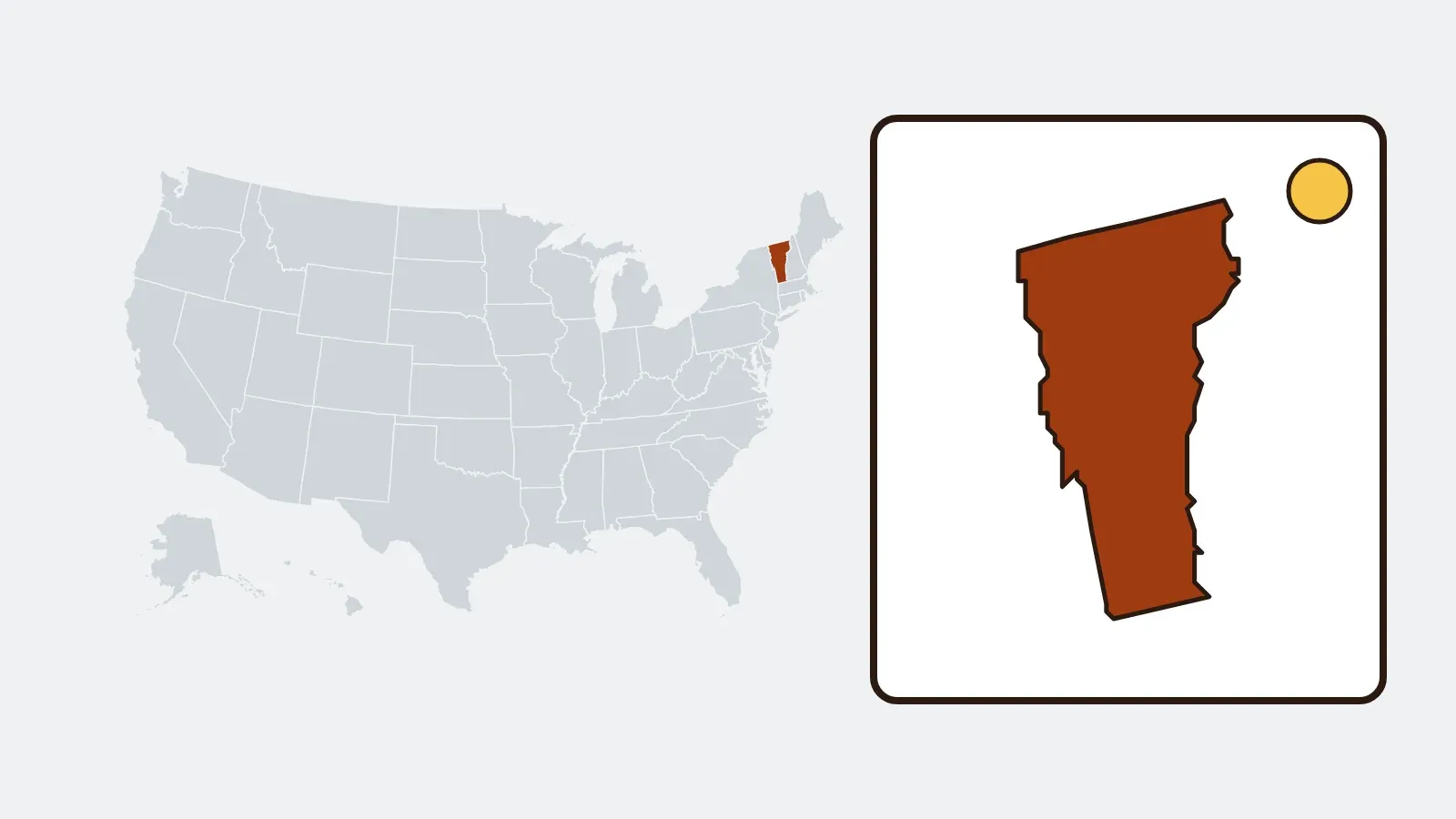
Vermont car-finance rules at a glance
- Right to cure
- None found in state law; repossession may follow a default
- Neither 9 V.S.A. chapter 59 nor Vermont's Article 9 contains a cure-notice section.
- Rate ceiling
- 18% a year on current or prior model years; 20% on older vehicles
- 9 V.S.A. §2356a and §41a(b)(4); the same caps apply to loans secured by a vehicle.
- Doc fee limit
- No cap found in state law; the fee is part of the taxable price
- After repossession
- Notice before sale; you may redeem; deficiency allowed
- Vehicle sales tax
- 6% purchase and use tax on the price minus trade-in
- The base is the price or the J.D. Power clean trade-in value, whichever is greater.
- Regulator
- Department of Financial Regulation (Banking Division)
How much interest a Vermont car contract can carry
When a dealer arranges your loan, you sign a retail installment contract governed by Vermont's Motor Vehicle Retail Installment Sales Financing chapter (9 V.S.A. chapter 59). Section 2356a sends you to the state's interest statute, 9 V.S.A. §41a(b)(4), which sets the ceiling by the age of the car.
| Vehicle | Maximum rate |
|---|---|
| Current or previous model year | 18% a year |
| Older than the previous model year | 20% a year |
The same caps apply to a loan secured by the car, so a lender's direct loan works under the same numbers. A ceiling is not a typical price: compare the APR on each offer and see what it costs in dollars with the car payment calculator.
Chapter 59 adds a few protections to the contract itself. A clause that frees the seller from your legal remedies is not enforceable. If you signed but the dealer never delivered the car, you may cancel the contract and get back every payment you made (§2355). Keep a signed copy of the contract and the buyer's order together, since you will need both if a dispute comes up later.
Fees and taxes on a Vermont purchase
- Doc fee. We found no Vermont statute that caps it. The Department of Motor Vehicles says the fee covers preparing the sale documents, belongs in the purchase price and is subject to the purchase and use tax.
- Official fees on the contract. Chapter 59 requires the contract to show each official fee as a separate, identified charge.
- Purchase and use tax. Cars are taxed at 6% of the purchase price or the J.D. Power clean trade-in value, whichever is greater. The tax is collected when you register the car.
- Trade-ins. The value the seller allows for a car you own and have registered in your name is left out of the taxable cost (32 V.S.A. §8902).
Falling behind on a car loan in Vermont
We found no Vermont statute that gives car buyers a notice and a set period to catch up before repossession. Chapter 59 lets the contract holder collect a reasonable delinquency charge if the contract provides for one, plus expenses such as storage after a repossession. After a default, the lender may take the car without a court order if it does not breach the peace. Call the lender as soon as you know a payment will be late, and ask about an extension or a new due date before the account is in default.
- Repossession. Vermont's Uniform Commercial Code (Title 9A, Article 9) lets the lender take the car after default without going to court, but not by force or threats.
- Notice before the sale. The lender must notify you before it sells the car; consumer contracts get a notice with set contents (§9-611 to §9-614).
- Your chance to redeem. Until the sale, you can get the car back by paying what you owe plus the lender's costs (§9-623).
- Deficiency or surplus. If the sale brings less than you owe, you may owe the rest; if it brings more, the surplus is yours (§9-615 and §9-616).
Read our guides to repossession and to falling behind on payments for what to do at each step.
Where to check a lender and complain
The Department of Financial Regulation's Banking Division oversees lenders and sales finance companies, the firms that buy dealer contracts. You can check a license on NMLS Consumer Access.
Department of Financial Regulation
Regulates lenders and sales finance companies and takes banking complaints at 802-828-3307.
Vermont Department of Motor Vehicles
Collects the purchase and use tax and answers title and registration questions.
Consumer Financial Protection Bureau
Takes complaints about any auto lender or servicer, including banks and finance companies.
Questions people ask
What is the maximum interest rate on a car loan in Vermont?
18% a year for a car from the current or previous model year and 20% for an older car, under 9 V.S.A. §41a(b)(4).
Is the dealer doc fee taxed in Vermont?
Yes. The Department of Motor Vehicles says it is part of the purchase price and subject to the 6% purchase and use tax.
Does a trade-in lower the tax in Vermont?
Yes. The value allowed for a car you own and have registered is left out of the taxable cost.
Do I get a warning before my car is repossessed in Vermont?
We found no state law that requires one. The lender must notify you before it sells the car, and you can redeem it until the sale.
Sources
- Vermont Statutes, 9 V.S.A. §41a: Rates of interest
- Vermont Statutes, 9 V.S.A. §2356a: Motor vehicle finance charge limitation
- Vermont Statutes, 9 V.S.A. §2355: Retail installment contract requirements
- Vermont Statutes, Title 9A, Article 9: Secured transactions
- Vermont DMV: Vehicle taxation
- Vermont Statutes, 32 V.S.A. §8902: Purchase and use tax definitions
- Vermont Department of Financial Regulation: Banking
Facts on this page were checked against these sources on October 26, 2026.
Read next
-
Guide
Retail installment contract
The disclosure box, the Holder Rule notice, spot delivery and arbitration clauses, and a signing checklist.
-
Help
Repossession
When the lender can take the car, what an agent may not do, and how to get it back.
-

Guide
Out-the-door price
Every line from vehicle price to amount financed: doc fees, sales tax, add-ons and the trade-in.