Utah Car Loan Laws
Utah lets the dealer and buyer agree on the rate, leaves doc fees uncapped, and lets lenders repossess without a cure notice, but it shields small purchases from a deficiency.
Updated By Lenditia Editorial Team 6-minute read No right to cure
In short
Utah's Consumer Credit Code lets the parties to a credit agreement set any finance charge the rest of the code does not restrict, so a dealer contract has no general rate ceiling. Doc fees have no cap, but they must be listed apart from state fees. There is no right-to-cure notice before repossession. If the cash price was $3,000 or less, a repossession settles the debt in full. The state sales tax is 4.70%, plus local tax.
- Right to cure
- None in state law
- Rate ceiling
- No general cap
- Doc fee limit
- No cap; listed separately
- Vehicle sales tax
- 4.70% state + local
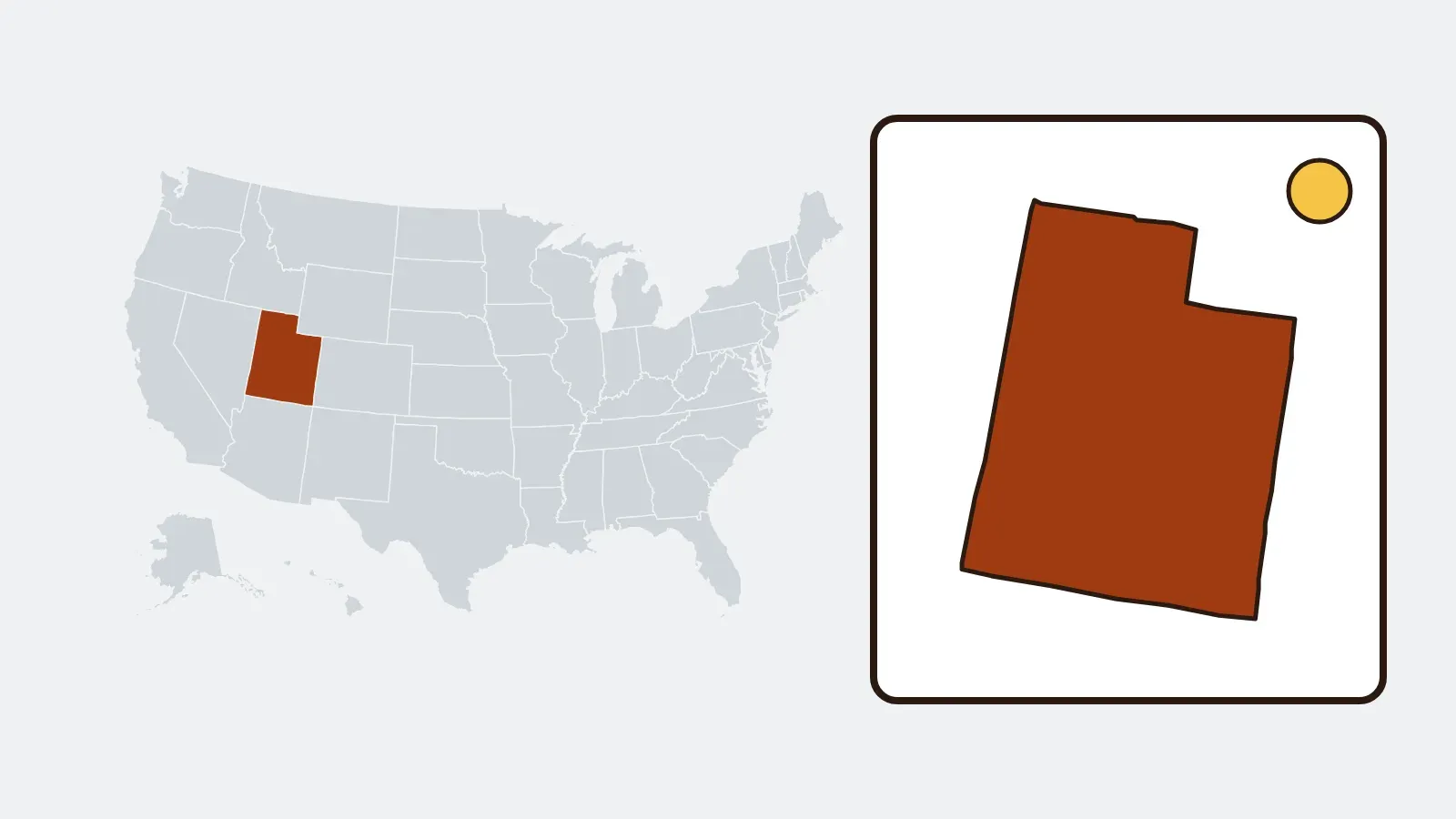
Utah car-finance rules at a glance
- Right to cure
- None; the Consumer Credit Code has no cure notice
- Rate ceiling
- No general cap on dealer contracts; the parties agree on the rate
- Utah Code §70C-2-101. Banks and credit unions follow their own charter rules.
- Doc fee limit
- No cap in state law; must be listed apart from state fees
- Dealers with temporary permit authority must post a sign saying the fee is not set by the state.
- After repossession
- Notice before sale; redemption; no deficiency if cash price was $3,000 or less
- Utah Code §70C-7-101, with exceptions such as damage to the car after delivery.
- Vehicle sales tax
- 4.70% state rate plus local tax; vehicle-for-vehicle trade credited
- Regulator
- Department of Financial Institutions (DFI)
What a Utah car contract can charge
When a dealer arranges your loan, you sign a retail installment contract, and Utah's Consumer Credit Code (Title 70C) applies. Section 70C-2-101 says the parties may agree to any finance charge unless another part of the code limits it. No section sets a percentage ceiling for car sales, so the rate in your contract is the rate you negotiated.
That puts the work on you. The contract must show the APR, and that is the number to compare with a bank or credit union offer. Get a preapproval before you visit the dealer, then check what each rate costs in dollars with the car payment calculator. Banks and credit unions follow their own charter rules, but they compete for the same loan.
Fees and taxes on a Utah purchase
- Doc fee. Utah sets no maximum. The Motor Vehicle Enforcement Division says the fee must be listed separately and may not be called a state-mandated fee. Since July 1, 2023, the dealer documentary service fee must also appear on the transaction disclosure form.
- Posted sign. Dealers with temporary permit authority must post a sign saying the doc fee covers dealer costs and profit and is not set by the state (rule R877-23V-14).
- Sales tax. The state rate is 4.70%, and city and county taxes are added. The lowest combined rate on the state's first-quarter 2026 chart was 6.35%. A dealer charges the rate where it is located; in a private sale, the rate is based on where you register the car.
- Trade-ins. The Division of Motor Vehicles credits a trade only when it is a vehicle-for-vehicle trade in the same transaction. Other trades are valued and taxed.
Ask for an itemized out-the-door figure before you talk about monthly payments, and check it with the out-the-door price calculator.
Falling behind on a car loan in Utah
Title 70C has no right-to-cure section, so Utah does not require a notice and a grace period before the lender acts on a default. What counts as default is set by your contract. Once you are in default, the lender may repossess without a court order, as long as it does not breach the peace.
- Repossession. The agent may tow the car from a driveway or a street, but may not use force or threats. Ask for any personal items left inside.
- Notice before the sale. The lender must tell you how and when it will sell the car.
- Getting the car back. Until the sale, you can redeem it by paying the full balance plus the lender's repossession costs.
- Small purchases. If the cash price was $3,000 or less and the seller repossesses or accepts the car back, the remaining debt is fully satisfied (section 70C-7-101). Above that amount, you can owe a deficiency.
The $3,000 rule has exceptions, for example when the car was badly damaged after delivery through no fault of the creditor, or when you refused to hand it over before the creditor sued. Our guides to repossession and the balance left after a sale explain each step.
Where to check a lender and complain
Creditors covered by the Consumer Credit Code file a Consumer Credit Notification with the Department of Financial Institutions through NMLS, which you can search online. Dealers themselves are licensed by the Motor Vehicle Enforcement Division.
Department of Financial Institutions
Administers the Consumer Credit Code and takes complaints about consumer lenders.
Motor Vehicle Enforcement Division
Licenses dealers and answers questions about dealer conduct at 801-297-2600.
Consumer Financial Protection Bureau
Takes complaints about any auto lender or servicer, including banks and finance companies.
Title loans and payday loans follow different Utah rules, covered by our sister site Lendmira.
Questions people ask
Is there a maximum interest rate on a car loan in Utah?
Not for a typical dealer contract. Utah's Consumer Credit Code lets the parties agree to any finance charge the code does not otherwise restrict, so compare the APR across offers.
Does Utah limit dealer doc fees?
No. Utah sets no maximum, but the dealer must list the fee separately and may not present it as a state fee.
Will I get a warning before my car is repossessed in Utah?
State law does not require one. The lender must send a notice before it sells the car. See what to do when you fall behind.
Can I owe money after a repossession in Utah?
Yes, unless the cash price was $3,000 or less. For those small sales, a repossession settles the debt, with limited exceptions.
Sources
- Utah Code §70C-2-101: Finance and other charges (2025 edition, via Justia)
- Utah Code §70C-7-101: Restriction on deficiency judgments (2025 edition, via Justia)
- Utah Motor Vehicle Enforcement Division: Dealer sales rules and doc fees
- Utah Legislature: HB 194 (2023), dealer documentary service fee
- Utah State Tax Commission: Sales and use tax rates
- Utah Division of Motor Vehicles: Taxes and fees
- Utah Department of Financial Institutions: Consumer lending
- FTC: Vehicle repossession
Facts on this page were checked against these sources on October 26, 2026. Local sales tax rates in Utah change by quarter, so check the Tax Commission's current chart for your city.
Read next
-
Guide
Retail installment contract
The disclosure box, the Holder Rule notice, spot delivery and arbitration clauses, and a signing checklist.
-
Help
Repossession
When the lender can take the car, what an agent may not do, and how to get it back.
-
Help
Deficiency balance
How lenders compute what you owe after a repossession sale, and how to check or dispute it.