Connecticut Car Loan Laws
Connecticut caps dealer financing by the age of the car, gives you 15 days to catch up after a repossession, and limits when a lender can collect a deficiency.
Updated By Lenditia Editorial Team 7-minute read Right to cure
In short
Connecticut's Retail Installment Sales Financing Act caps the APR on a dealer contract at 15% for a new car, 17% for a used car up to two model years old and 19% for older ones. The dealer conveyance fee has no cap, but it is negotiable and must be posted and shown separately. Sales tax is 6.35%, or 7.75% on most passenger vehicles over $50,000, and your trade-in is not taxed. If your car is repossessed, you have 15 days to reinstate the contract by paying what is past due, and a lender can seek a deficiency only on vehicles with a cash price over $4,000. The Department of Banking licenses sales finance companies.
- Right to cure
- 15 days to reinstate
- Rate ceiling
- 15%–19% APR by car age
- Doc fee limit
- No cap; negotiable
- Vehicle sales tax
- 6.35% (7.75% > $50,000)
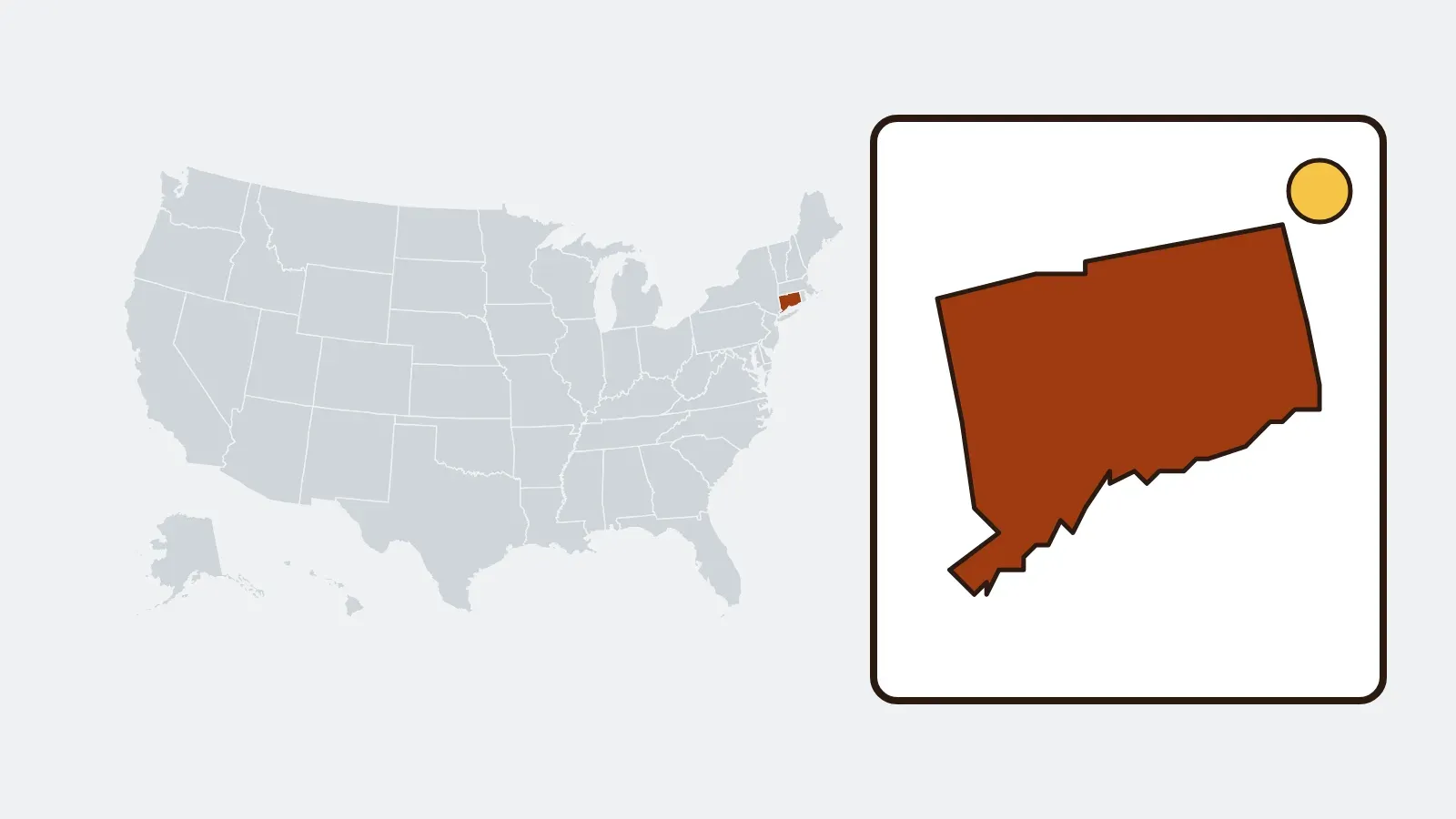
Connecticut car-finance rules at a glance
- Right to cure
- Yes: 15 days after repossession to reinstate, or by the date in a 10-day prior notice
- Conn. Gen. Stat. §36a-785. You pay the past-due amount and costs, not the full balance.
- Rate ceiling
- 15% APR new; 17% used up to 2 model years old; 19% older
- Dealer contracts under §36a-772. Banks and credit unions may follow other rules on direct loans.
- Doc fee limit
- No cap; conveyance fee is negotiable, posted and shown separately (§14-62)
- After repossession
- Notice in 3 days; sale 15–180 days later; no deficiency if cash price was $4,000 or less
- Vehicle sales tax
- 6.35%; 7.75% on most passenger vehicles over $50,000; trade-in not taxed
- Regulator
- Department of Banking
How much interest a Connecticut car loan can carry
Section 36a-772 of the Connecticut General Statutes sets the ceiling on a motor vehicle retail installment contract, the contract you sign when a dealer arranges your financing. Unlike some states, Connecticut states the limits as annual percentage rates, so you can compare them directly with your contract.
| Vehicle | Maximum APR |
|---|---|
| New vehicle | 15% |
| Used, model year no more than two years old | 17% |
| Used, older model year | 19% |
A ceiling is not a typical rate: buyers with good credit usually pay far less. A late payment can cost a delinquency charge only after it is 10 days overdue, and the charge is the lesser of 5% of the overdue amount or $10 (§36a-778). The holder may not add other fees for collecting a late payment, such as a fee for paying by phone. Test your offer with the car payment calculator.
Conveyance fees and sales tax in Connecticut
- Conveyance fee. Connecticut sets no cap on the dealer's conveyance fee, the state's name for a doc fee. Under §14-62, it is negotiable, must appear separately in any quoted price and cannot be added when you sign the order.
- Disclosure. The order and invoice must say in bold type that the fee is not payable to the State of Connecticut. The dealer must post a sign with the amount and the services it covers, and must lower the fee proportionally if you file the registration paperwork with the DMV yourself.
- Sales tax. The rate is 6.35%. Passenger vehicles priced over $50,000 are taxed at 7.75%, and the $50,000 test uses the price before the trade-in. Conveyance fees are taxable; service contracts stay at 6.35%.
- Trade-in. The value of your trade-in is not taxed, so it reduces the amount you pay tax on.
Falling behind and repossession in Connecticut
Section 36a-785 gives Connecticut buyers more room than most states. A holder may send a notice of intent to repossess at least 10 days ahead, stating the exact amount and deadline to cure. If it skips that notice, it must hold the car for 15 days after taking it, and you can get it back by paying the past-due amount, not the whole balance. Either way, you get a chance to catch up.
- Repossession. The holder may take the car without a breach of the peace or through a court. A Chapter 7 bankruptcy filing is not a default on its own.
- Notice within 3 days. The holder must mail you, by registered or certified mail, the past-due amount and its retaking and storage costs, plus how to collect your personal belongings, which must stay available for at least 60 days.
- 15 days to reinstate. Pay the unaccelerated amount due, interest and reasonable costs, and cure any other breach, and the contract continues as if you had not defaulted.
- Sale. If you do not reinstate, the holder must sell the car 15 to 180 days after taking it, with at least 10 days' written notice, and send you an itemized statement within 30 days of the sale. Any surplus is yours.
- The deficiency. No deficiency may be collected if the cash price was $4,000 or less. Above that, the sale counts as at least the car's fair market value, measured from the NADA used car guide, and only the shortfall below that value can be charged to you.
If the holder breaks these rules, you can recover your actual damages and never less than one-fourth of what you paid under the contract. Our guides to repossession and the balance left after a sale explain how to use them.
Where to check a lender and complain
A company in the business of a sales finance company, such as one that buys dealer contracts, needs a license under §36a-536, issued by the Department of Banking. The department also oversees state banks and credit unions. Consumer loan rate caps are covered on our sister site's Connecticut lending laws page.
Connecticut Department of Banking
Licenses sales finance companies, offers a license lookup and takes consumer complaints through its Consumer Assistance office.
Department of Motor Vehicles
Licenses dealers and sets the format of the conveyance fee sign.
Consumer Financial Protection Bureau
Takes complaints about any auto lender or servicer, including banks and finance companies.
Questions people ask
What is the maximum interest rate on a car loan in Connecticut?
On a dealer contract, 15% APR for a new car, 17% for a used car no more than two model years old and 19% for older cars (§36a-772).
Can I get my car back after repossession in Connecticut?
Yes. Unless the holder gave you a 10-day cure notice before repossession, it must keep the car for 15 days, and you can reinstate by paying the past-due amount and reasonable costs.
Can a Connecticut lender sue me for a deficiency?
Only if the vehicle's cash price was over $4,000, and then only for the amount the balance exceeds the car's fair market value or the sale price, whichever is higher.
Is the dealer conveyance fee capped in Connecticut?
No. It is negotiable, must be posted and shown separately, and the paperwork must say it is not payable to the state.
Sources
- Conn. Gen. Stat. §36a-772: Maximum finance charge on retail sales of motor vehicles (2025)
- Conn. Gen. Stat. §36a-785: Repossession, redemption, resale and deficiency (2025)
- Conn. Gen. Stat. §36a-778: Delinquency and collection charges (2025)
- Conn. Gen. Stat. §14-62: Dealer orders, invoices and conveyance fees (2025)
- Connecticut DMV: Sales tax calculator and taxable items
- Connecticut DRS: Special Notice 2011(10), rate on vehicles over $50,000
- Conn. Gen. Stat. §36a-536: Sales finance company license (2025)
- Connecticut Department of Banking
Facts on this page were checked against these sources on October 26, 2026. The 7.75% rate on vehicles over $50,000 has applied since July 1, 2015.
Read next
-
Help
Repossession
When the lender can take the car, what an agent may not do, and how to get it back.
-
Help
Deficiency balance
How lenders compute what you owe after a repossession sale, and how to check or dispute it.
-
Guide
Retail installment contract
The disclosure box, the Holder Rule notice, spot delivery and arbitration clauses, and a signing checklist.